


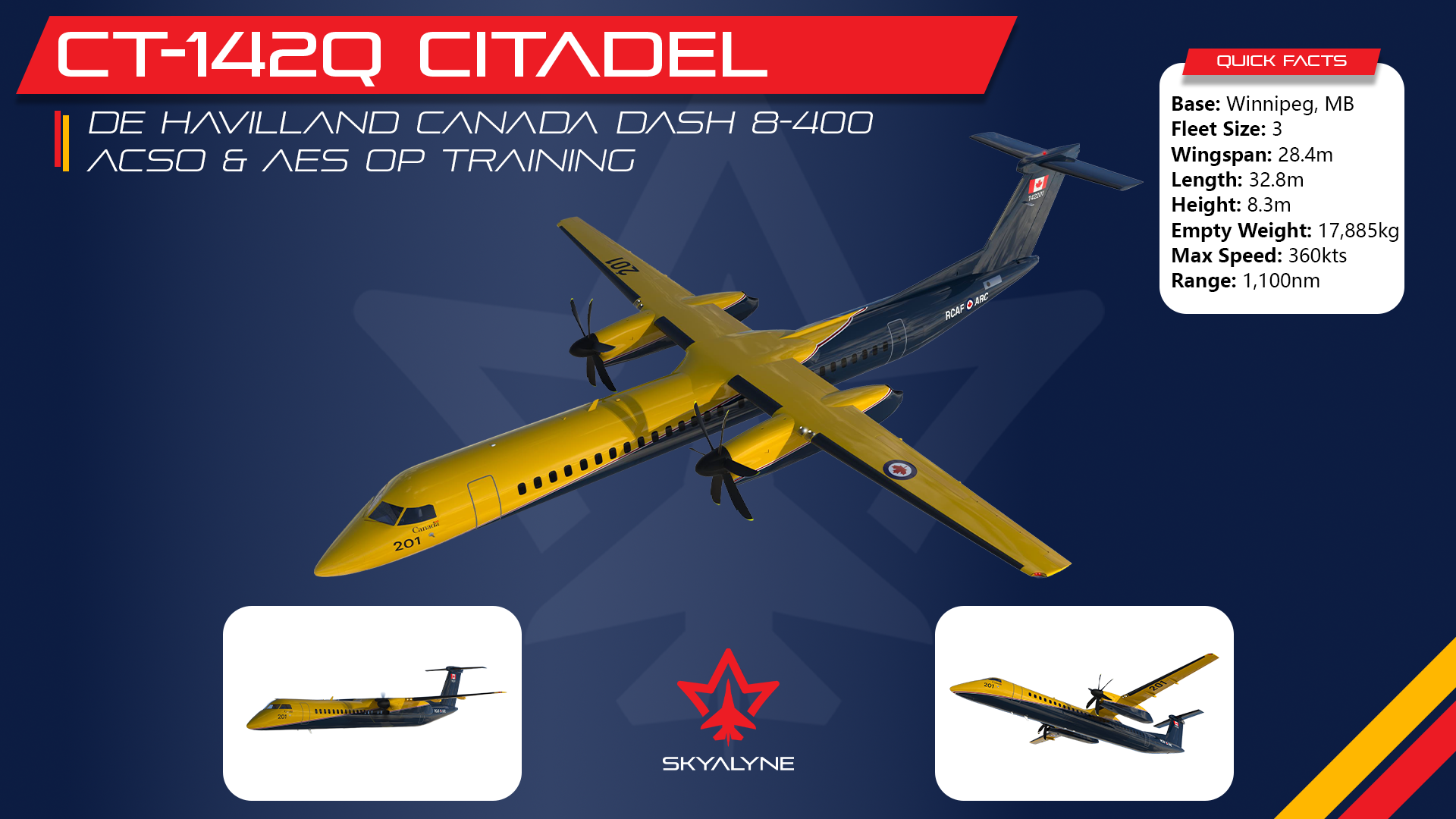
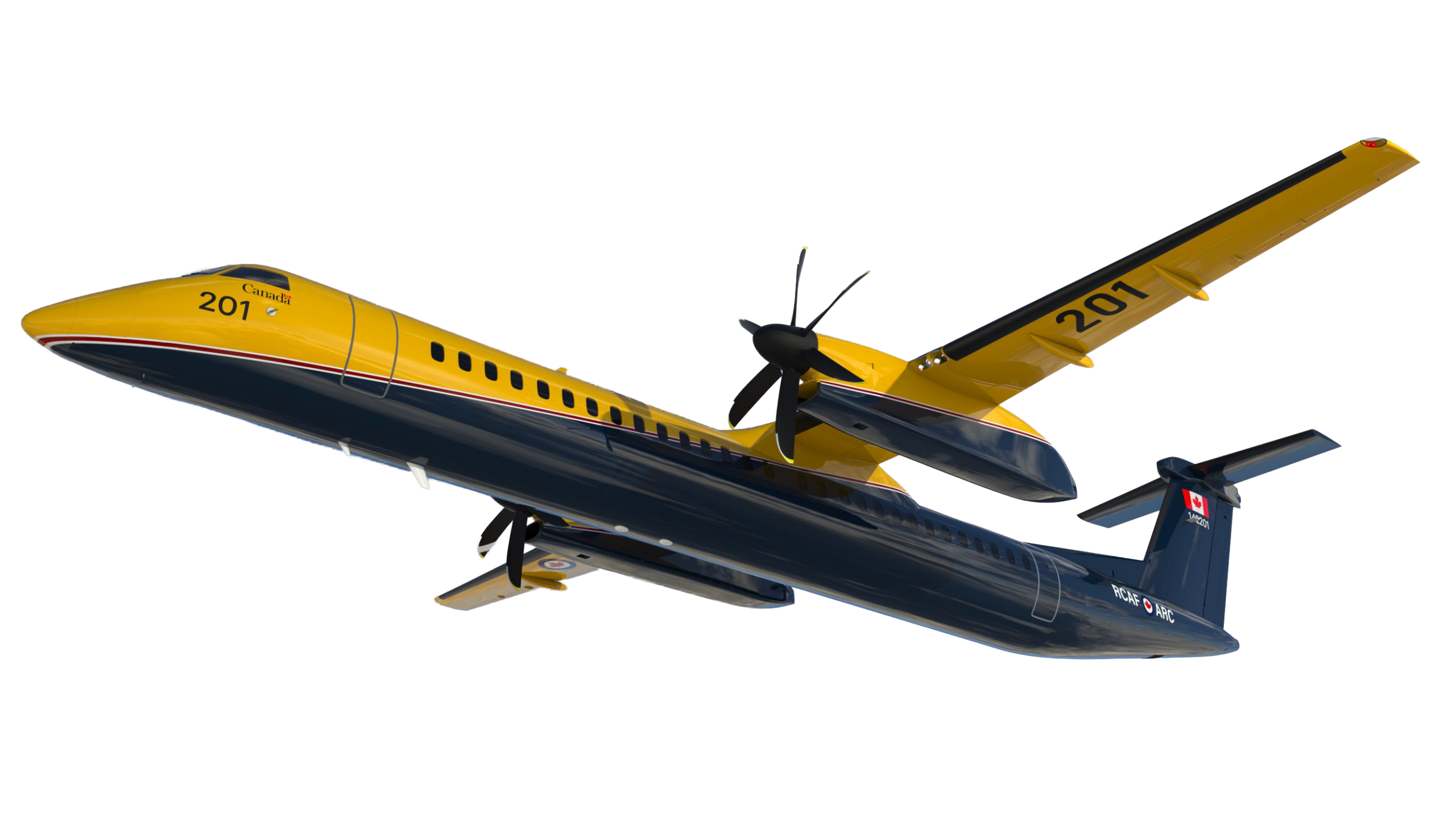
March 31, 2026 // Ottawa, ON — The Future Aircrew Training (FAcT) program CT-142Q Citadel (De Havilland Canada Dash 8-400) was shown today for the first time in RCAF colours. The livery was released digitally and in the RCAF presentation to the Military Flight Training Conference by Major-General Jeff Smyth, Chief of Air and Space Force Development.
In the FAcT program, the CT-142Q Citadel will serve as the platform for training Airborne Electronic Sensor Operators (AES Op) and Air Combat Systems Officers (ACSO), replacing the previous generation Dash 8-100 (CT-142) aircraft, which have been in service in the RCAF for more than 30 years. The FAcT program’s approach to ACSO and AES Op training is also a generational leap forward, where the aircraft provide blended reality: real live-flying, mixed with an entirely synthetic operational environment. This will allow students to experience the real sensations of flight, while tracking synthetic targets, in synthetic geographic locations anywhere in the world, in any type of conditions.
As with other FAcT aircraft, the Citadel’s name and livery pays tribute to the 100+ year history of the RCAF, while reflecting a forward-looking vision for Canada’s modern Air Force. The approach to naming and painting FAcT aircraft was thematic. Given that 2024 marked both the RCAF Centennial and the kickoff of the FAcT program, Canada’s Air Force took the opportunity to commemorate 100+ years of RCAF flight operations and training history, while we are also stepping into the next generation of military aircrew training in Canada.
About the ‘Reflect Forward’ livery
Each aircraft will bear a colour scheme that is primarily two colours: yellow, to reflect the historical ‘training yellow’ of the Commonwealth Air Training Plan aircraft that dominated Canadian skies from 1940 to 1945, and dark blue to reflect the modern colours of today’s trainers and Air Force.
There is also a white and red line, symbolizing Canada’s national flag, binding the colours together— this stripe being reminiscent of the RCAF’s ‘Lightning Bolt’ worn by various aircraft since 1948.
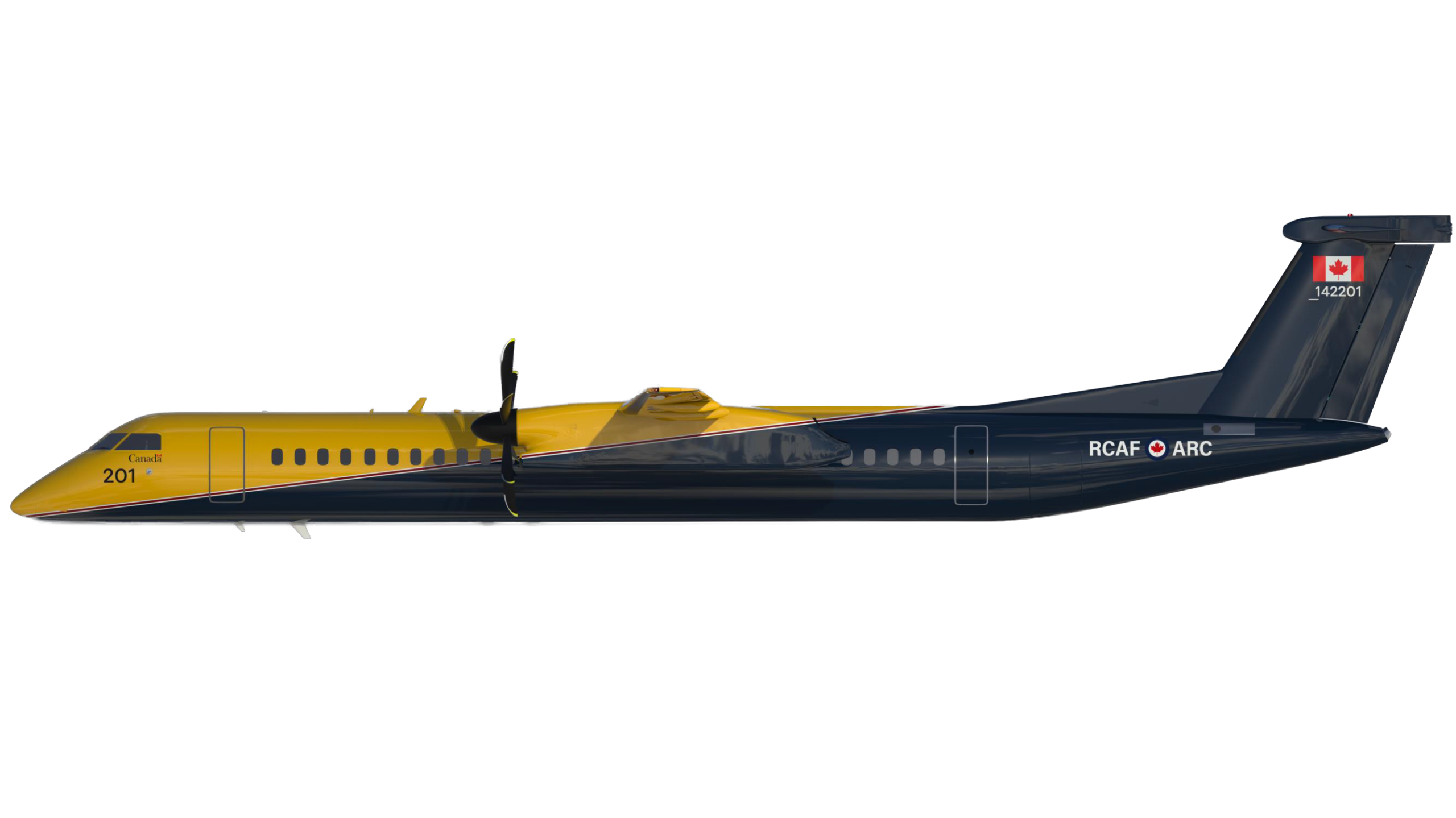
Together, these colours pay tribute to our successful historic training initiatives and Canada’s continuation of excellence in aircrew training as the RCAF looks to the next one hundred years. This combination of honouring our history, while advancing into the future is what drove the name of the livery: Reflect Forward.
It’s also very important that each time a RCAF student aircrew step into one of these aircraft, they understand the significance of what it means: they are joining an institution with a very proud history and a bright future.
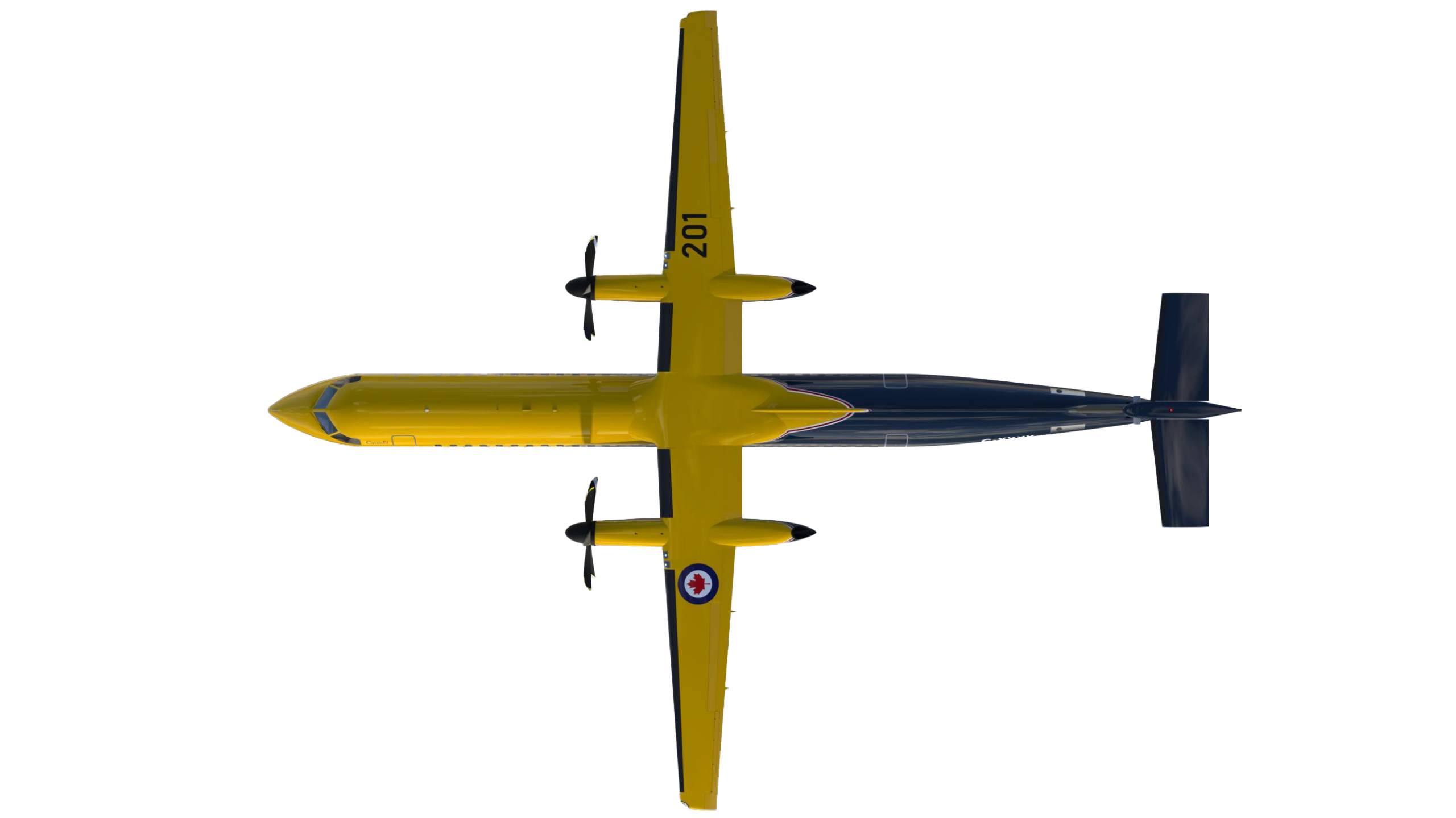
There is also a very practical reason for this two-tone livery: the dark blue, when used in conjunction with the high visibility yellow provides contrast against a variety of terrains and weather conditions, making it easier for pilots to see other aircraft in the sky and against the ground, especially when flying over summer prairie terrain and in winter conditions when snow is on the ground. In other words, this is an important blend of form and function, where visibility is chiefly important for training aircraft.
CT-142Q Citadel
De Havilland Canada Dash 8-400
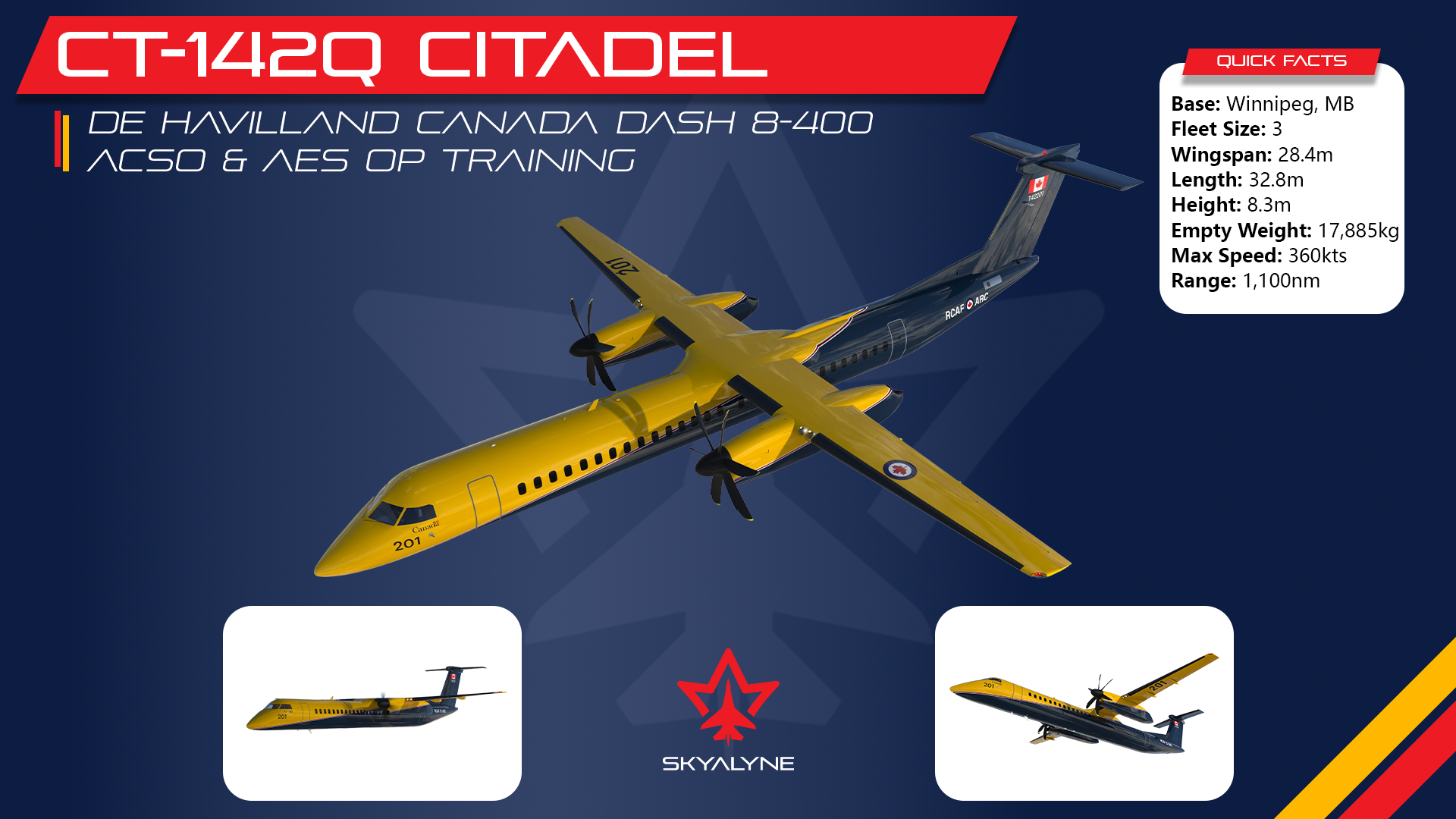
The CT-142Q Citadel takes its name from two prominent military citadels in Canada – La Citadelle de Quebec and the Halifax Citadel, both of which have played significant roles in Canada’s military history. As an aircraft that trains Air Combat Systems Officers and Airborne Electronic Sensor Operators to protect Canadian sovereignty by operating systems for long range patrol aircraft, like the soon-to-arrive CP-8A Poseidon, and Cyclone helicopters, the name ‘Citadel’ harkens to the similar protective qualities of these two impressive defensive structures.

